
If You Don't see Something, Say Something

Recently, I was in a restaurant that had had a major renovation within the

past year. It looked lovely, and was easily accessible, until I went to use

the single-occupancy restroom, which had been renovated as well. The

tiles were gleaming, the sink was wheelchair accessible, the soap

dispenser and towels were easy to reach, the toilet was a good height.

Then I noticed that there were no grab bars on the walls near the toilet. I

was surprised. The owners had done such a good job with everything else,

why were there no grab bars? Upon leaving the restroom, I found the

manager and asked about it, saying, “You have done a beautiful

renovation, with almost everything wheelchair friendly. Can you tell me

why there are no grab bars in the restrooms?” She looked at me with a

quizzical expression on her face and told me she did not have an answer.

But she did say that no one has complained, or even mentioned the lack

of grab bars.. After further conversation, she assured me that she would

notify the owner and they would “get it done.” While I am fairly sure that

they will get it done, the bigger question for me was, “why hadn’t anyone

mentioned it?”

In my years of working with Destination Accessible, and speaking with

people with disabilities, as well as their families and friends, I have

discovered that people with disabilities are hesitant to complain about

anything because they don’t want to be considered, “complainers.”

People have told me that they feel that they are already “looked down on”

and don’t want to give people any more reasons to think of them as

“trouble.” How sad is that?

We are all used to the “See Something, Say Something,” campaign that

began shortly after 9/11, and continues today. The idea of reporting

possible danger when we see it, is certainly ingrained in my mind. No one

complains about people doing this because we are OK with “Better safe

than sorry,” if the thing we were concerned about turns out to be OK.

I would like to suggest that more people, and not just those with

disabilities, consider a,” If you don’t see something, say something

campaign.” If you don’t see a push-button assist (or non-working assist)

door opener, tell someone, If you don’t see an accessible entrance, tell

someone. If you don’t see grab bars, an accessible sink, soap and towelsthat are easily reachable, a coat hook that is not reachable, in what is

supposed to be an accessible restroom, please tell someone. If you don’t

see Braille elevator options, or clear signage in a building getting people

around hazards, tell someone. If you don’t see accessible emergency

evacuation routes, tell someone, If If you don’t see a door that is easy to

open, tell someone. If you don’t see an accessible path to your seat, tell

someone. If you don’t see a handrail where one would be helpful, tell

someone. These are only some of the many things you might notice.

There are also things that you should tell someone about if you do see

them. If you see a “lip” between one room or area and another that is

difficult to get over, tell someone. If you see a restroom door that opens

“in” rather than out, making it difficult to manage with a walker or

wheelchair, tell someone . If you see a step that is too difficult for you to

manage, tell someone. Again, these are only some of the things that

individuals with disabilities, may find difficult.

The ADA (Americans with Disabilities Act), July 26, 1990 is the law that

was created to protect people with disabilities from being discriminated

against. For those with disabilities, it is supposed to make life easier when

visiting public places. There are many parts to the document, with

specifics about parking spaces, entrances, restrooms, seating, steps,

service animals, etc. People who don’t need these accommodations

usually don’t notice when something is not working for those of us that do

need them.

It is not complaining to tell someone who is in a position to do something

about it. It is everyone’s right to be accommodated. You don’t have to do it

in a complaining way, Be polite and explain why you are telling them what

you are telling them. Our experience is that most people want to be

helpful. If we don’t let them know how to do that, we cannot expect them

to do it!

If more people explain their needs to businesses, hopefully businesses will

begin to address those needs.
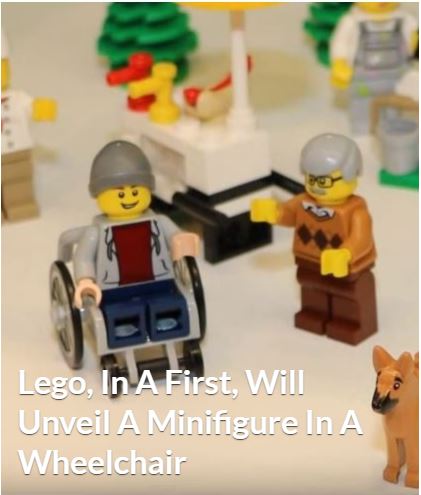
This summer, Lego will release its first-ever mini-figure that uses a wheelchair, the company says, confirming reports that emerged after one of the toys was seen at a toy fair. In recent years, the company has been urged to show more diversity in its offerings.

An image taken from a video by Lego fan website Zusammengebaut shows a new minifigure in a wheelchair. The toy will go on sale in June, the company says.

German website Zusammengebaut and other Lego fan outlets published photographs of the figurine at the International Toy Fair in Nuremberg, Germany, on Wednesday, setting off celebrations among those backing a movement called Toy Like Me, which urges Lego, Hasbro, Fisher Price and other toymakers to include disabilities in some of their figurines.

Included in Lego's upcoming Fun at the Park set, the wheelchair is seen being used by a youth wearing a beanie cap and a hoodie.

"We are beyond happy right now," Rebecca Atkinson of Toy Like Me says in a statement posted online. "Lego have just rocked our brick built world and made 150 million disabled kids, their mums, dads, pet dogs and hamsters very very happy.

The wheelchair is part of Lego's City line and will go on sale in June, according to Emma Owen, Lego's spokesperson in Britain and Ireland.

"This is the first LEGO mini figure with a wheelchair, although previously there was a LEGO Duplo range, a series of the toys aimed at pre-school children, that featured an elderly man in a wheelchair," website The Mighty explains. "That set was criticized by activists for reinforcing stereotypes about wheelchairs only being for the elderly. This new figure is a part of the LEGO line aimed at older kids."

Atkinson, a journalist and disability consultant, says Lego's move "will speak volumes to children, disabled or otherwise, the world over."

More than 20,000 people have signed Toy Like Me's online petition that calls on Lego to use its toys to "help generations of kids, (both with and without disabilities), grow up with a more positive attitude to human difference!"

by Roberta Rosenberg

Happy New Year!  2022 has certainly arrived with a punch. Most of us believed that things would be much better by now.  Unfortunately, Covid had a different idea and brought us Omicron, in full force just as this New Year arrived. I would venture to say that, at the very least,  most of us are really tired of dealing with it. That being said, we still do need to be careful, both for ourselves, loved ones, co-workers, etc. 

Even though we want to be careful, some still want to go out to meet friends for dinner, etc. Masks are required in many places, with enforcement being rather lax. New York City has met the problem by requiring vaccinations for restaurants and other indoor spaces. Long Island has not embraced this line of thinking, but some Long Island restaurants have taken it upon themselves to do what NYC has done, and require proof of vaccination for indoor dining.

This article is not about accessibility for those with mobility challenges. It is about venues that are requiring proof of Covid vaccination for indoor dining.  The information comes from a Newsday article by Erica Marcus. Before I list the places, I must caution you to check for yourself, if the policy is still in existence when making a reservation.  I discovered that several of the restaurants I initially knew about have since changed their policies. During these uncertain times things can change quickly. As we tell visitors to our website, www.destinationaccessible.org, you always need to check a venue’s website, or call personally, to “know before you go,” for up-to-the-minute information. 

If you visit any of these venues, please share with our their policies,  as well as their accessibility.  If you know of any others, we would love to add them to our list. The only one we have personally visited was West End Cafe, and that was well before Covid. 

1. West End Cafe, Carle Place, www.westendli.com, (516) 294-5605 

2. Kristi Mediterranean Grill, Woodbury,  www.krinti.com, (516) 224-4661

3. Sandbar, Cold Spring Harbor, www.sandbar.com, (631) 498-6188

4. Takumi, Commack, www.takuminy.com, (631) 543-0101

5. Grasso’s, Cold Spring Harbor, www.grassosrestaurant.com (631) 367- 6060

6. BTW, Oceanside, www.btwoceanside.com, (516) 208-5322

7. Black Sheep Ale House, Mineola, www.blacksheepalehouse.com. (516) 307 - 1280

Most of us have library cards and generally know about the wonderful array of services our libraries offer. Depending on your local library, besides borrowing actual books, books on tape, and audio versions, they may offer performances, classes both in person and on zoom, reference help, and services for patrons with disabilities. 
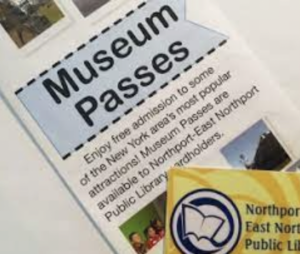
I was recently reminded of another great perk that comes with having a library card.  Your Long Island Library Card doesn’t cost anything to get, and doesn’t have any fees. It does, however, come with many perks, including one that many people don’t seem to know about - the Museum Pass Program. 
The Museum Pass Program offers card holders the opportunity to reserve free passes to many Long Island and New York City museums. From the Museum of Modern Art in Manhattan to the Parrish Art Museum on the East End of Long Island, you can find a museum to visit. Whether you admire art, want to learn about science and history, or  explore different cultures, visiting a museum lets you discover new things. 
Go to your local library’s website to find out what museums it offers passes for. You can usually reserve a pass for up to four people at a time.  Some passes can be printed online, others require pick-up at the library. Check your library’s website for details, as each library seems to have a somewhat different set up. Library offerings differ and there are restrictions, so be sure to check. If you have any difficulties you might want to pay a visit to your library or call for assistance. Librarians are always ready and willing to help.

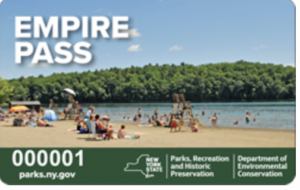
picture of front of Empire Pass
Spring is in full swing and summer is right around the corner. The weather has been good to us and hopefully, we have all had opportunities to be outdoors.  New York State has more than 250 parks, historic sites, nature centers, etc. that can be available to us at reduced rates, or in some cases, even free. There are 37 State Parks just on Long Island, and another 33 in NYC and north to Albany. From Normal Levy Park, to Jones Beach State Park, to Bethpage Golf Course, one doesn’t need to travel very far to find a great place to visit.  The Empire Pass is a wonderful card that “permits unlimited vehicle access  (parking) to most facilities operated by NY State Office of Parks, Recreation Historical Preservation, and the Department of Environmental Conservation Facilities.” (website)  There are one year, three year, five year and lifetime passes available. You can check the cost at “www.parks,ny.gov,”  There are also free reductions at historic sites and state operated golf courses.  If you are over the age of 62 and only intend to visit these venues Monday - Friday (not including holidays), you can use your drivers’ license or non-driver ID, for free access. There are also reduced rate passes for persons with disabilities (Access Pass) and veterans (Patriot Plan). Please visit www.parks.ny.gov, for more information on obtaining your Empire Pass. You won’t be sorry you did it! You can "know before you go," about many of these parks by visiting www.destinationaccessible.org.
Destination Accessible and The Business Power Hour With Lisa and the Music Man

by Roberta Rosenberg

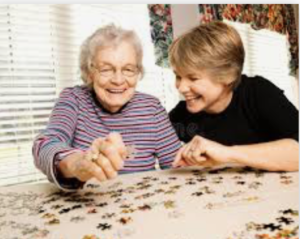
“January 29th, is National Puzzle Day, the perfect day to do a little brain exercise. Whether it’s a crossword, jigsaw, or Sudoku, (to name just a few) puzzles engage our brains in more ways than one. Scientists have discovered that when we work on a jigsaw puzzle, we utilize both sides of the brain, improving memory, cognitive function and problem solving skills in the process. By utilizing puzzles, people can stimulate the brain to improve a number of skills.” (National Calendar Day)

But, I think the best thing about puzzles is that they are fun!  Whether working on The New York Times crossword (not me), doing a Sudoku, wordsearch, jumble, or having a jigsaw puzzle out on a table, we are usually enjoying ourselves. Puzzles are generally relaxing and engrossing, yet sometimes frustrating.  Finishing one offers a sense of accomplishment. And, puzzles are inexpensive indoor activities, especially during the winter months.

The first jigsaw puzzle ( initially called “dissected maps” ) was probably made in 1767, by a mapmaker. The world’s first crossword was published in December, 1913 in the “New York World” Newspaper. During the Great Depression, puzzle sales soared to over 10 million per week. During our Covid Pandemic, puzzle sales increased 300-400%, probably because puzzles are well-suited to staying at home. (information obtained from "The Jstor Daily,” article by Rebecca Bodenheimer - 12/16/20)

Considering all of the benefits of puzzles and, between winter in full swing and Covid still keeping many of us indoors,  I thought now would be a good time to research some of the best places to obtain puzzles, both puzzles to do online, and places to get puzzles to do “in person.”

From my research I am listing some of what seem to be the best places to get the best puzzles. This list is, by no means, complete.  If you have other suggestions PLEASE share them with us.

Best Places to purchase Jigsaw puzzles:

- Amazon   -   biggest selection

- Dawdle  and Mondo   -   great selections

- Jiggy   -   most beautiful artwork

- Puzzle Masters   -   unique object puzzles

- ebay   -   rare vintage puzzles

- Walmart   -   kids’ puzzles

Free puzzles online:

www.dictionary.com   -   daily crossword puzzles

www.boatloadpuzzles.com    -   free online  crosswords

www.washingtonpost.com  and www.games@washingtonpost.com

www.games@aarp.com   -   daily crosswords

www.thewordsearch.com   -   free word searches

www.razzlepuzzzles.com   -   you select the difficulty 

www.247wordsearch.com   -   good selection 

www.arkadium.com   -   a variety of free word games

www.sudoku.com

https://.games.usatoday.com

by Roberta Rosenberg

Are you or someone you know on the Autism Spectrum and preparing for a flight?  If there are communication, social interaction and/or sensory sensitivities you can watch and learn what to expect during airport security screening by viewing a short video on the www.tsa.gov website.

TSA Cares is a helpline that has been created “to provide travelers with disabilities, medical conditions and other special circumstances additional assistance during the security screening process.” (TSA website) 

Take note that this is only available for help through the screening checkpoint. If you need in-flight assistance, or wheelchair assistance from curb to flight you need to contact your airline.

The TSA Cares helpline ( 855 - 787 - 2227) is available on weekdays from 8:00 am to 11:00 pm ET and weekends from 9:00 am to 8:00pm. You can also all the federal relay at 711. If your flight is within 72 hours you must call. If you are getting in touch earlier than that, you can go online to fill out the required form for assistance. 

At some airports across the country there is a program called “Wings For All,” for children with special needs. I would describe it as a flying rehearsal, The child (and family) get to go to the airport to see what it is all about. You can find out more about it online as well. As far as I can tell, in the New York Metro Area,  it is only available at JFK and Newark airports.

We at Destination Accessible always advise you to “look at a venue’s website,” to get more information. We ask you to do this for more  information and to see the video. 

We hope that this has been helpful.

Enjoy your flight!

Travel is a dream come true for many of us, but that dream can become more difficult to achieve with age, illness or accidents.  Thanks to technology, everyone can enjoy virtual travel, which lets us see the world from the comfort of our homes. Even if we are in good heath, winter weather can make us not want to leave our homes.  This is a good time to use your internet connection, computer, tablet or smartphone to visit places you always dreamed of, or places you have visited and remember fondly. For those of us that struggle with technology, family, friends or caregivers can help us set up and even enjoy the adventures with us. Virtual travel has many benefits: we can visit multiple destinations a day, is easily accessible to those with mobility issues, is available 24 hours a day, ignites a sense of wonder and excitement when visiting a new place, or “nostalgia” for a place we have visited and loved. It allows people to explore the world, learn about cultures and experience destination without the physical travel’s barriers.  Virtual travel is stimulating. It keeps our brains active by learning about new cultures, history and art. It can also boost happiness. During my research for this article I took a virtual tour of Yosemite Park, went on a real-life safari in a private game reserve, took a day trip in Morocco, took a London walk from the London eye to Covent Gardens, took a Culture Trip Down Route 66, revisited Stone Henge and flew over the Taj Mahal. You can do all of these and much, much more. There are many sites where you can find virtual tours - many are free, or have free components, some may have a cost involved (although it is much less expensive than an actual visit).   The following list is by no means all there is, but you can use it as a starting point for your adventures!  Let us know where you went and what you thought of it. Let the adventures begin!!!  

compiled by Roberta Rosenberg - Destination Accessible US, Inc.

Note: The following suggestions are a result of my research. It is by no means complete. Since I grew up long before electronics became a necessity in our lives, I drew on things my family, friends and I used to do and enjoy. I’m sure you will be able to add more.

- complete a puzzle you have - trade puzzles with others
- do crossword puzzles, Suduko, or other word games- start a journal about  this time (I used to keep a “diary”)- meditate- practice yoga

- write actual letters to family and/or friends

- get a pen pal

- knit, crochet, needlepoint, hook a rug

- paint, draw,  learn to scrapbook,

- interview grandparents, parents, other relatives or friends

over the phone - save the audio and create a story about

the person

- write a book with your family - choose a topic - each person

writes a chapter on the topic 

- look at family photos - make a photo collage for your room of

for a gift

- make birthday cards in advance

- learn calligraphy

- create a list of things you want to do when we get out again

- get a free trial of a TV streaming service and binge watch as

much as you can before it expires  (be careful of end date)

- watch a tv show at the same time as a friend - talk on the 

phone as you watch or as soon as it is over

- try new recipes - or learn to cook or bake

- libraries are open for “pick-up” borrow a really long movie

you have always wanted to watch

- borrow a cookbook

- borrow videos

- borrow books on topics that interest you

« Previous PageNext Page » « Previous PageNext Page »